Blog
OpenSPR Binding Data Advances Delivery Method of Photodynamic Cancer Therapeutics
Dr. Xiaofeng Liu recently published a paper using binding data generated from OpenSPR to reveal an effective affibody-based photosensitizer carrier used in Photodynamic Therapy (PDT), a less invasive alternative to cancer treatments. Read the full article to see how OpenSPR provided Dr. Xiaofeng Liu with the key binding data needed to advance PDT.
OpenSPR-XT Binding Data Opens New Doors for Targeting of RNA Binding Proteins for Glioblastoma Therapeutics
Dr. Luis Penalva recently published a paper using binding data generated from the OpenSPR-XT’s automated SPR technology assessing the effectiveness of luteolin binding to RNA binding protein, Msi1. Read the full article to see how OpenSPR-XT provided Dr. Penalva with the key binding data needed for his latest discovery of an effective glioblastoma treatment.
Discovery of a Gene Regulation Network in P. aeruginosa Biofilm Production using OpenSPR Binding Data
Dr. Tung T. Hoang recently published a paper using binding data generated from OpenSPR to quantify the formation of a stable complex between 2 co-regulators of biofilm production and their target DNA binding sequence. Read the full article to see how OpenSPR provided Dr. Hoang with the key binding data needed to authenticate a gene regulation network in P. aeruginosa biofilm production.
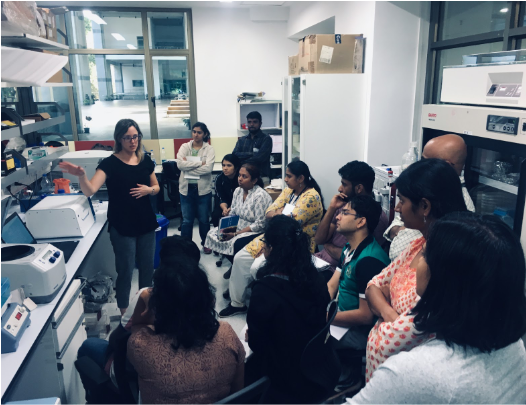
The OpenSPR Centre of Excellence – Building a Community of Innovative Researchers in India & Beyond
Dr. Ramaswamy (Dr. Rams) is a leading scientist in India with over 100 publications to date. In collaboration with Dr. Rams and his lab, Nicoya hosted the grand opening of the “OpenSPR Centre of Excellence” at the Institute for Stem Cell Biology and Regenerative Medicine in Bangalore, India.
OpenSPR Binding Data Advances Peptide Screening Methods
Dr. Leonard Luyt recently published a paper using binding data generated from the OpenSPR to quantify the binding behaviour of a chemically synthesized 7 kDa RHAMM “mini-protein” engineered for screening of candidate therapeutic peptides. Read the full article to see how OpenSPR provided Dr. Luyt with the key binding data needed for his latest advancement on therapeutic peptide screening methods.
OpenSPR Binding Data Advances Targeting Potential of Anti-Cancer Therapeutics
Dr. Huile Gao recently published a paper that unveils how protein corona formation may significantly reduce the interaction potential of ligand-modified PNs to target TfR, a common target for anti-cancer therapeutics. Read the full article to see how OpenSPR binding data provided Dr. Huile Gao insight into enhancing drug delivery methods for anti-cancer therapeutics.
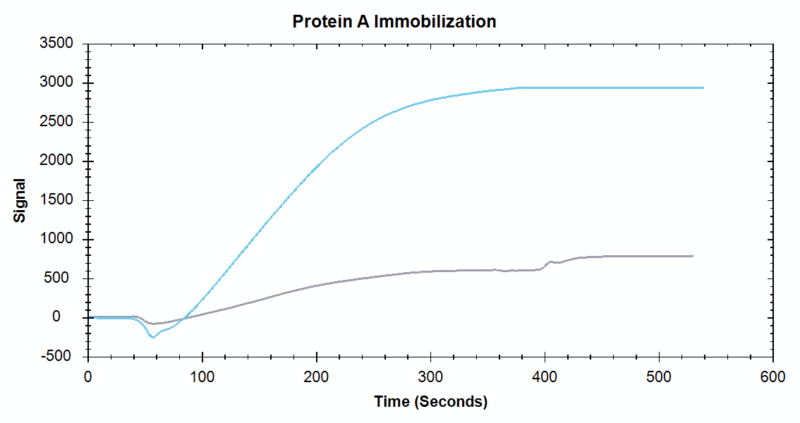
Improve Your SPR Data Quality by 4X with New High Sensitivity Sensors
Combined with 2-Channel benchtop SPR technology, High Sensitivity Sensors enable a 4x sensitivity increase with higher ligand immobilization levels while maintaining the same ligand concentration per injection.

Binding Kinetics of Protein A and IgG using 2-Channel Benchtop SPR
The 2-Channel OpenSPR is ideal for generating high quality and highly reproducible binding data with less time and effort.
OpenSPR Antibody Binding Data Challenges Traditional Hepatitis B Vaccination Strategies
Dr. Yu-Ching Lee recently published a paper challenging traditional hepatitis B vaccination (HBV) strategies through his study of antibody-antigen interactions.
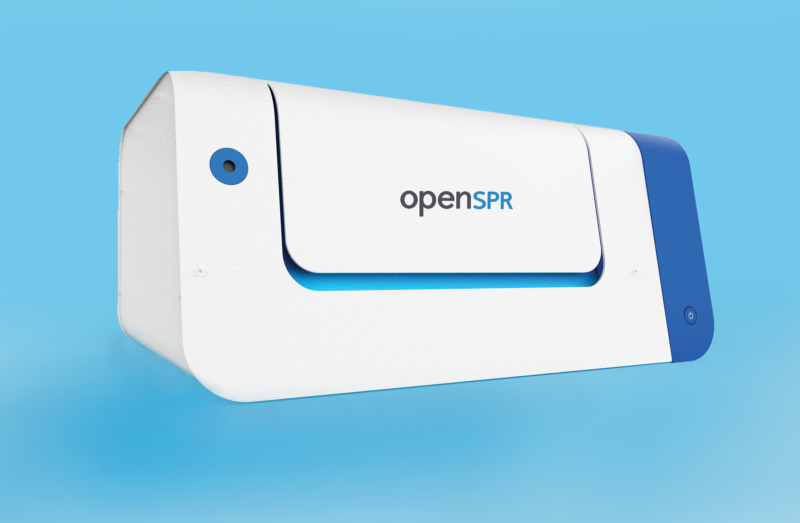
Nicoya redefines SPR with new affordable, benchtop 2-channel system
Nicoya releases their new 2-channel OpenSPR instrument. With the addition of a second channel and a number of automated and user-friendly features, the company is continuing their mission to help scientists solve their toughest research challenges in both industry and academia.
OpenSPR Phospholipid Binding Data Advances Cardiac Health Research
Dr. Zeczycki, a researcher at East Carolina University, uses OpenSPR’s surface plasmon resonance technology to get the key binding data needed for their recent publication on protein-lipid interaction. Results show that elevated levels of DHA may contribute to various metabolic disease via a reduction in cardiac mitochondrial enzyme activity.
OpenSPR Binding Data Helps Advance Cervical Cancer Therapies
Dr. Zhang recently published a paper demonstrating the disruption potential of small molecules synthesized from taspine-derivatives to combat the Janus kinase/signal transducers and activators of transcription (JAK/Stat) signaling pathway, a known pathway in the development of cervical cancer. Read the full article to see how OpenSPR provided Dr. Zhang with the data needed to publish her protein-small molecule research.
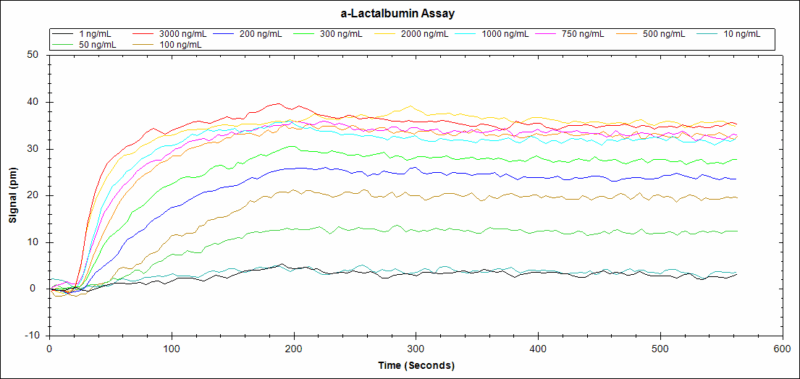
Determination of Protein Concentrations using OpenSPR
Looking for quick, easy and affordable protein concentration analysis? Benchtop SPR can help. In our application note, we demonstrate how OpenSPR™ can be used as a concentration assay for determining the level of α-lactalbumin, an important protein in milk.
OpenSPR Binding Data Helps Advance Biotherapeutic Drug Discovery
Dr. Brown, a researcher at Lehigh University, uses OpenSPR’s surface plasmon resonance technology to get the key binding data needed for their recent publication on protein-peptide interaction, demonstrating the possibility of using target-based peptides to inhibit leukotoxin mediated cytotoxicity in human white blood cells.
OpenSPR Binding Data Helps Advance Ageing & Cancer Research
Dr. Roth, a researcher at the Medical University of South Carolina, uses OpenSPR’s surface plasmon resonance technology to get the key binding data needed for their recent publication on protein-protein interaction, helping them discover a direct link between telomere damage–dependent senescence and apoptosis with regards to aging and cancer.

SPR, ITC, MST & BLI: What’s the optimal interaction technique for your research?
Currently, the four most used techniques are Surface Plasmon Resonance (SPR), Isothermal Titration Calorimetry (ITC), Microscale Thermophoresis (MST), and Biolayer Interferometry (BLI). Each technique has its advantages and disadvantages. Read our SPR, ITC, MST & BLI comparison and take a 5 minute quiz to determine the optimal technique for your research.

How Dr. Piazza uses SPR to complement NMR data for protein structure-function publications
Dr. Piazza, PhD graduate from the University of Waterloo, uses both NMR & OpenSPR’s surface plasmon resonance technology to get the key binding data needed for his recent publication on protein-peptide interaction.
8 Ways to Make The Most Of Your Leftover Research Funding
As the fiscal year end quickly approaches, we understand how hard it is to juggle purchasing lab equipment and chemical reagents, while trying to meet publication deadlines. Read “8 Ways to Make the Most of Your Leftover Funding” to see how you can spend your leftover funding to accelerate your research with OpenSPR & publish within 3 months.