Biotin-streptavidin capture is one of the most widely used and trusted immobilization strategies in surface plasmon resonance (SPR).
From antibody discovery and oligonucleotide binding studies to protein interaction analysis, researchers routinely rely on biotinylated ligands to create stable, oriented surfaces with exceptional specificity.
Despite its widespread adoption, not every high-throughput SPR platform supports streptavidin chemistry. For scientists evaluating new instrumentation, surface chemistry flexibility can be just as important as throughput, sensitivity, and ease of use.
With the introduction of the new 16-channel streptavidin cartridge, Alto now supports one of the most common capture chemistries in biomolecular interaction analysis, expanding both the applications existing users can run and the workflows new customers can bring to the platform.
What Is Biotin-Streptavidin Immobilization?
Biotin-streptavidin immobilization on SPR follows key steps:
- A protective sugar coating is rinsed off from the streptavidin surface with buffer
- A biotinylated ligand is introduced.
- The ligand binds with extremely high affinity.
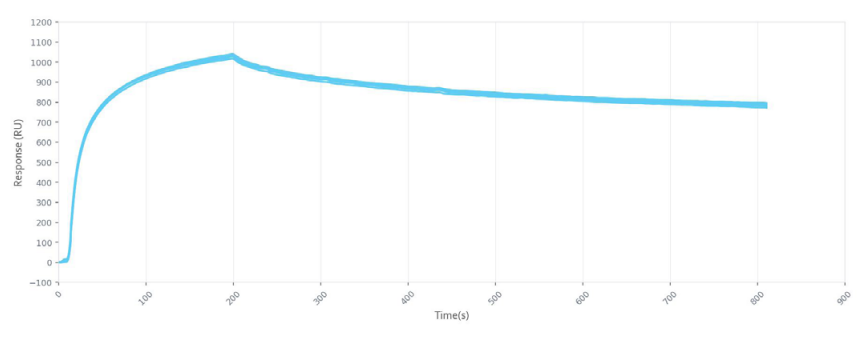
- The analyte is introduced over the captured ligand at different concentrations to measure binding kinetics and affinity.
- Between analyte cycles, the ligand is regenerated
Because the biotin-streptavidin interaction is extraordinarily strong and highly specific, it creates robust surfaces that are easy to prepare, highly reproducible, and can withstand many regeneration cycles without losing activity.
Why Scientists Prefer Streptavidin Surfaces
Site-Specific Capture
Immobilization through a biotin tag allows ligands to be immobilized in a controlled and consistent orientation, ensuring maximal binding activity
Minimal Surface Preparation
Researchers can use commercially available biotinylated reagents, and immobilize them without complex amine coupling protocols and perishable reagents.
Broad Compatibility
Common applications include:
- Antibodies and proteins
- Receptors and cytokines
- Oligonucleotides and aptamers
- Peptides
High Reproducibility
The quasi-covalent immobilization of the ligand on the surface ensures consistent loading across cycles within an experiment.
The pre-coated sensors offer a consistent and reliable surface with low variability across different experiments.
Common Applications of Streptavidin SPR
Streptavidin surfaces are especially useful for:
- Antibody-antigen characterization
- Epitope binning and competition assays
- Oligonucleotide hybridization
- Aptamer binding studies
- Biosimilar and comparability testing
For many scientists, streptavidin chemistry is a required capability when evaluating a new SPR platform.
Why Surface Chemistry Flexibility Matters in High-Throughput SPR
High-throughput SPR increases experimental efficiency, but throughput alone is not enough.
Researchers also need:
- Surface chemistries compatible with their existing assays
- Reproducible sensor performance
- Minimal method redevelopment
- Reliable lot-to-lot consistency
Adding streptavidin chemistry to a platform can significantly expand the range of assays that can be performed without altering established workflows.
Introducing Streptavidin Cartridges for Alto
The new 16-channel streptavidin cartridge brings high-throughput biotin capture to every Alto system.
For Existing Alto Users
- Run biotin-based assays without new hardware.
- Expand into new applications immediately.
- Use established reagents and protocols.
Considering an Alto? Now you can finally:
- Evaluate Alto for workflows that require streptavidin surfaces.
- Access high-throughput kinetics with cartridge-based simplicity.
- Reduce dependence on traditional fluidics-based systems.
Reproducibility Across Cartridges and Lots
Surface chemistry flexibility is only valuable if performance is consistent.
In a technical note evaluating four manufacturing lots of Alto streptavidin cartridges across multiple instruments and operators, the results demonstrated:
Cartridge-to-Cartridge Reproducibility
- Sensitivity: 2.1% CV across cartridges
- Ligand immobilization: 4.7% CV across cartridges
- Analyte response: 2.7% CV across cartridges
Kinetic Reproducibility (72 Measurements)
- Ligand immobilization: 5.9% CV
- Rmax: 5.3% CV
- Ka: 13.9% CV
- Kd: 19.9% CV
This data highlights the consistent and reproducible kinetics obtained with the Alto instrument within and across cartridge lots.
Why This Matters for Drug Discovery and Development
Reproducible capture surfaces are essential for:
- Confident hit validation
- Accurate affinity ranking
- Reliable comparability studies
- Regulatory submissions
- Cross-site method transfer
By combining high-throughput Digital SPR with a trusted immobilization chemistry, Alto enables researchers to generate high-confidence kinetic data at scale.
One New Cartridge. A More Versatile Alto.
The addition of streptavidin chemistry expands Alto’s compatibility with one of the most widely used capture strategies in biomolecular interaction analysis.
For current users, it unlocks new applications without a hardware upgrade.
For scientists evaluating high-throughput SPR platforms, it adds a critical surface chemistry to a system designed to deliver publication-quality kinetics with cartridge-based simplicity.
Download the Technical Note
See the full reproducibility dataset and learn how Alto now supports high-throughput biotin capture with confidence.