Biosimilar development has always been driven by one central question: can a proposed product be shown to be highly similar to the reference biologic with no clinically meaningful differences in safety, purity, or potency?
According to recent guidance from the U.S. Food and Drug Administration, the answer increasingly depends on the strength of a sponsor’s analytical characterization strategy.
If a comprehensive analytical assessment (CAA) demonstrates that a proposed biosimilar is highly similar to the reference product, the FDA may allow a streamlined development program with limited additional clinical testing. In some cases, a human pharmacokinetic (PK) similarity study and immunogenicity assessment may be sufficient to support approval.
What is a comprehensive analytical assessment?
A comprehensive analytical assessment is an extensive comparison of the proposed biosimilar and reference product across all relevant critical quality attributes (CQAs), including:
- Primary structure
- Higher-order structure (check out the Chirascan CD instruments)
- Binding and functional activity (see how Alto does this!)
- Thermal and conformational stability (SUPR-DSF is the only plate-based intrinsic DSF platform)
- Glycosylation and post-translational modifications
- Purity and aggregation (SUPR-DSF for aggregation)
| Attribute | SPR | CD | HDX | DSF |
|---|---|---|---|---|
| Primary structure | ||||
| Secondary structure | X | |||
| Tertiary structure | X | X | ||
| Glycosylation & PTMs | X | |||
| Size & charge variants impact | X | X | X | |
| Target binding | X | |||
| FcRn binding | X | |||
| Off target / Cross reactivity | X | |||
| Thermal & conformational stability | X | X | X | |
| Purity & aggregation | X |
The goal is to identify any differences and determine whether they are likely to affect clinical performance.
Why analytical characterization matters more than ever
Comparative clinical efficacy studies are among the most expensive and time-consuming parts of biosimilar development. As analytical technologies have become more sensitive and informative, regulators have placed greater emphasis on structural and functional characterization as the foundation of biosimilarity.
This reflects a simple principle: if two molecules are shown to be highly similar in structure, stability, and function, there may be little residual uncertainty that requires large clinical studies to resolve.
The role of orthogonal biophysical characterization
No single assay can fully characterize a complex biologic.
Binding kinetics may confirm target engagement (think BLI!), but they do not reveal subtle differences in higher-order structure or conformational stability like Nicoya’s Chirascan and SUPR-DSF. Thermal stability measurements can identify changes in domain behavior, but they do not establish functional equivalence. Structural methods can detect conformational differences that may not be apparent in other assays.
That is why orthogonal analytical approaches are essential.
Together, they provide complementary evidence that strengthens the totality of the evidence regulators use to assess biosimilarity.
What this means for biosimilar developers
For analytical development and CMC teams, the implications are significant:
- Stronger analytical evidence can reduce development risk.
- Regulatory submissions can be supported by a more robust data package.
- Expensive clinical studies may be minimized.
- Development timelines may be shortened.
- More resources can be focused on the most meaningful comparability studies.
In an increasingly competitive biosimilars market, analytical rigor is both a scientific and commercial advantage.
Generating totality of evidence with integrated biophysical characterization
Nicoya offers a complementary suite of biophysical tools that measure structure, stability, and function in a unified workflow.
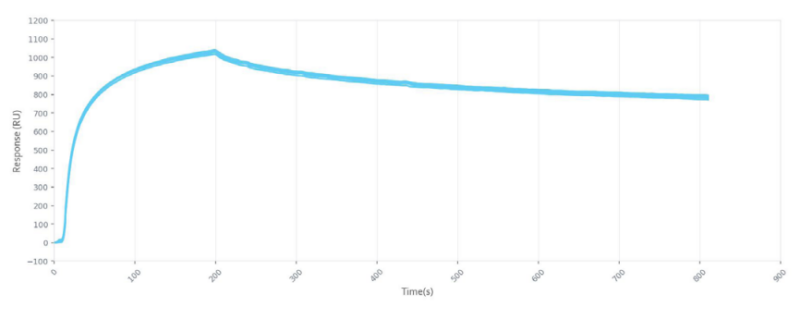
- Digital SPR: Functional Comparability → Digital SPR measures real-time binding kinetics, including association rate (Ka), dissociation rate (Kd), and affinity (Kd), to confirm mechanism of action and functional equivalence.
- SUPR-DSF: Stability and Developability → SUPR-DSF measures intrinsic fluorescence to reveal melting temperatures, unfolding transitions, and conformational stability without dyes.
- Chirascan CD: Higher-Order Structure → Chirascan circular dichroism spectroscopy provides statistically rigorous comparisons of higher-order structure.
Together, these orthogonal techniques support a comprehensive analytical assessment aligned with regulatory expectations.
Case study: Tocilizumab and a biosimilar candidate
In our latest application note, we compared Tocilizumab and a biosimilar candidate using Digital SPR, SUPR-DSF, and Chirascan CD.
The results demonstrated:
- Comparable binding kinetics: KD 6.25 nM vs. 7.27 nM
- Matching thermal unfolding profiles: Three domain transitions within <1°C
- Statistically equivalent higher-order structure: No significant differences in far-UV CD spectra
Together, these data provide compelling evidence of structural, thermodynamic, and functional similarity.
From better analytics to smarter development
The FDA’s message is clear: robust analytical characterization forms the foundation of biosimilar development.
When analytical evidence is strong, the path to approval may become more efficient.
By integrating measurements of structure, stability, and function, biosimilar developers can build stronger similarity packages, reduce uncertainty, and potentially lessen reliance on costly clinical studies.
Download the application note to see how integrated biophysical characterization can support a comprehensive analytical assessment and strengthen the totality of evidence for biosimilar development.