The American Society for Mass Spectrometry Conference 2026 reinforced what many structural biologists and drug discovery scientists already know: understanding protein dynamics is becoming just as important as understanding protein structure.
Throughout the conference, HDX-MS emerged as a recurring theme across presentations spanning biologics characterization, protein-ligand interactions, intrinsically disordered proteins (IDPs), peptide therapeutics, epitope mapping, and conformational analysis. Researchers are increasingly turning to HDX-MS to answer questions that traditional structural techniques often struggle to address—questions involving flexibility, transient states, allostery, mechanism of action, and dynamic conformational changes.
That growing interest was evident even before the conference officially began.
Ahead of ASMS, Nicoya hosted Cruise Beyond Conventional HDX-MS, bringing together scientists, innovators, and thought leaders from across the HDX-MS community for an afternoon of discussion on the San Diego marina. What began as an opportunity for informal networking quickly became one of the highlights of the week, with the yacht reaching full capacity and a waitlist forming prior to the event.
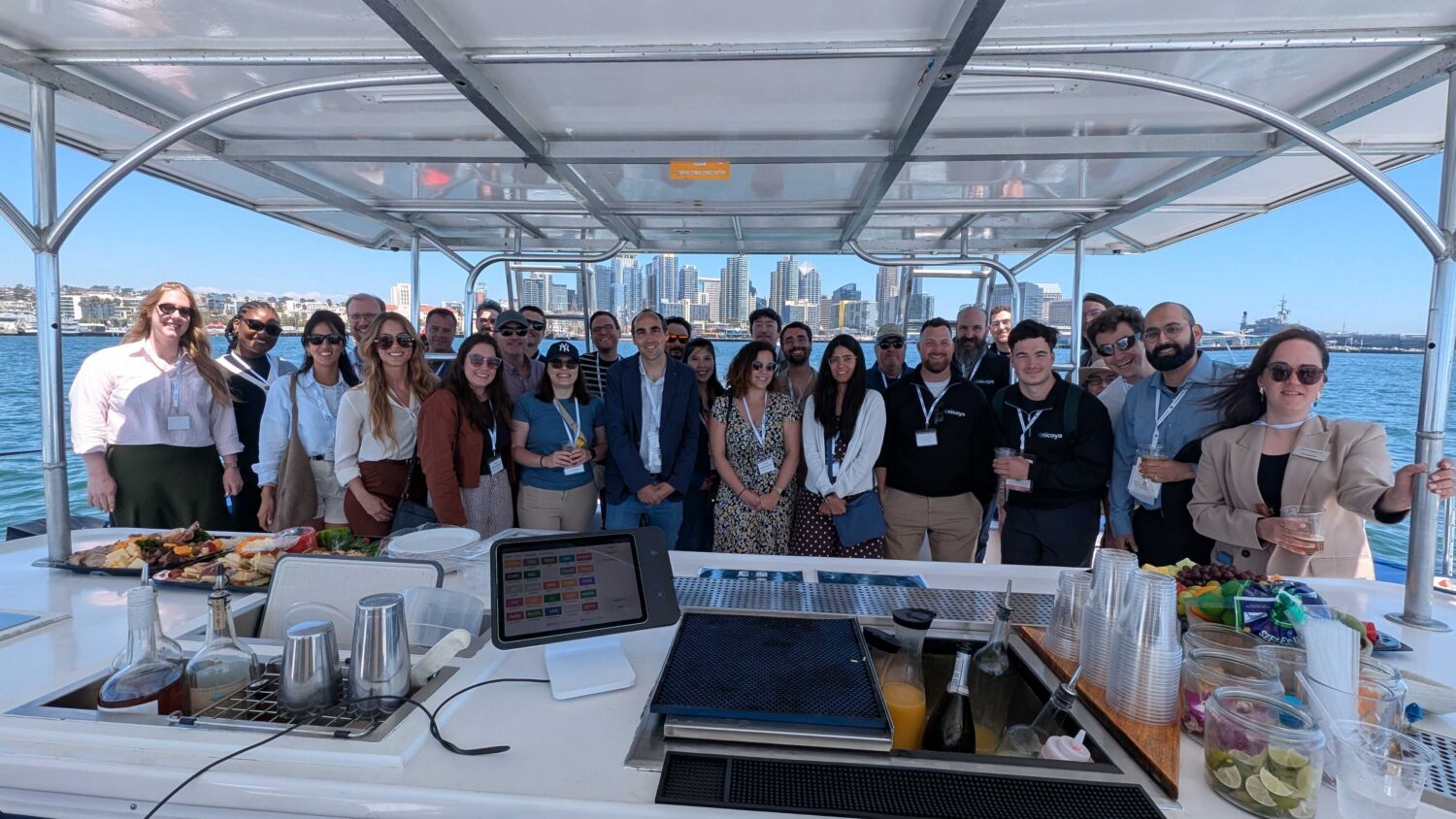
Researchers from pharmaceutical companies, biotechnology organizations, academic institutions, and technology providers gathered to discuss the future of protein dynamics research and the evolving role of HDX-MS in drug discovery. Conversations ranged from allostery and epitope mapping to intrinsically disordered proteins and emerging therapeutic modalities, highlighting both the growing adoption of HDX-MS and the increasing demand for deeper insight into protein behavior.
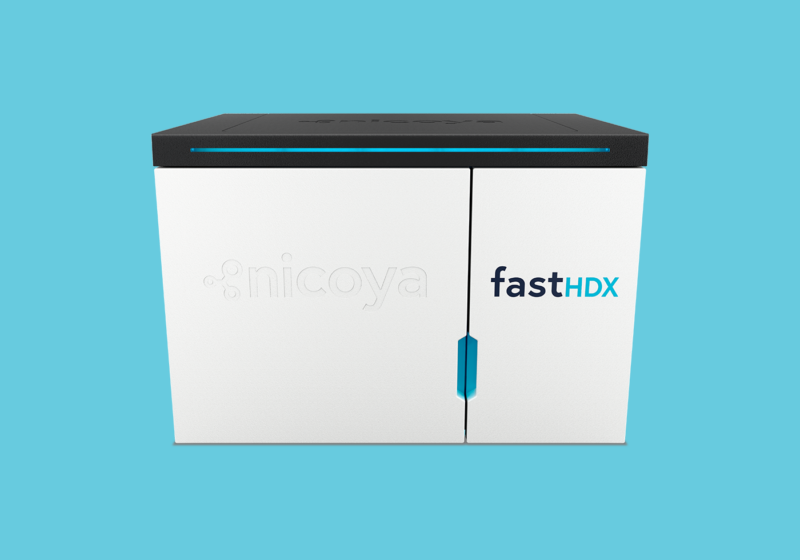
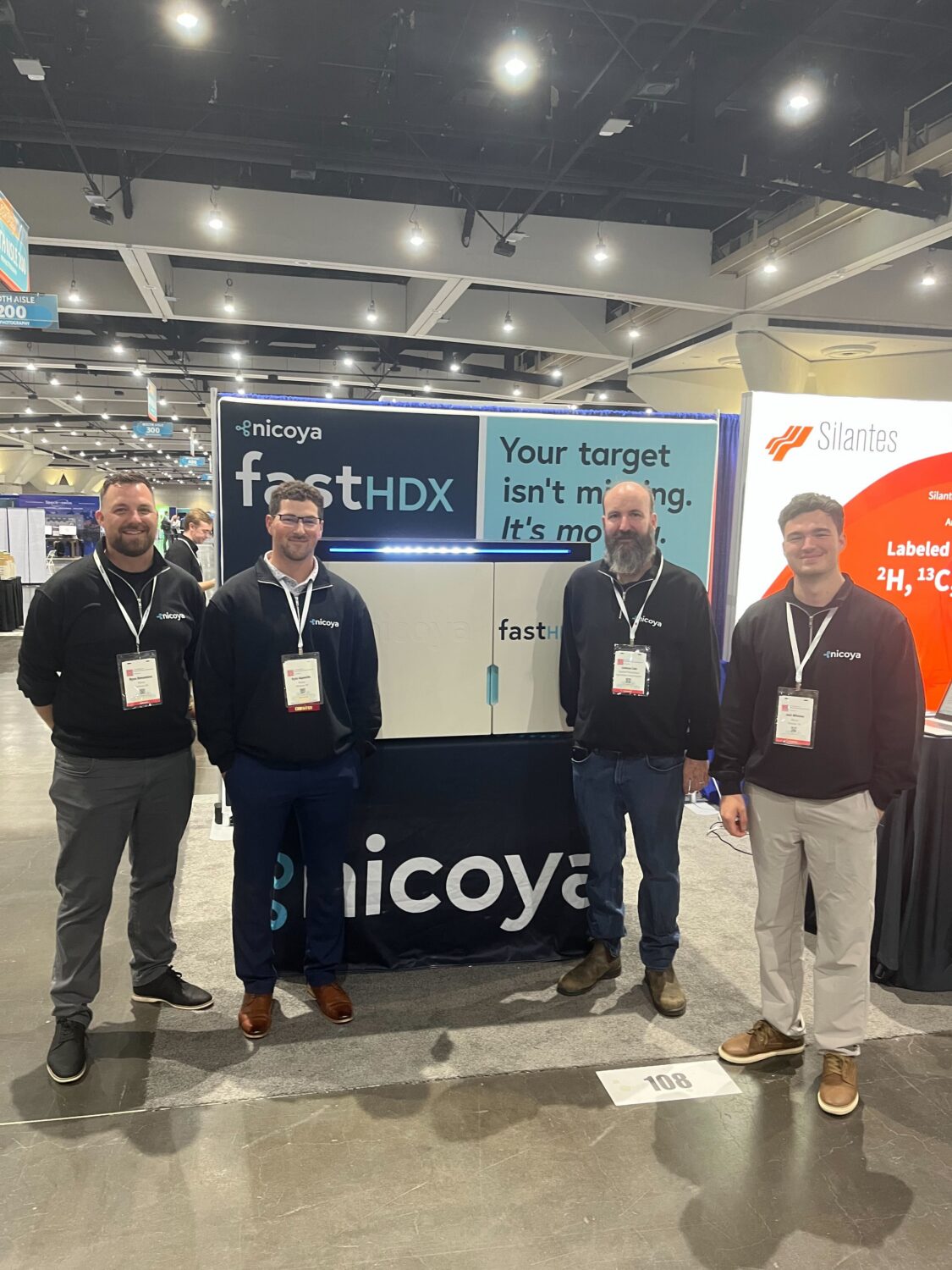
Against this backdrop, ASMS 2026 marked an exciting milestone for Nicoya as we introduced FastHDX to the broader mass spectrometry community. The response exceeded our expectations, with researchers from leading pharmaceutical companies, biotech organizations, and academic institutions stopping by to explore how millisecond-resolved HDX-MS could help answer biological questions that have historically remained out of reach.
Another highlight from the conference was the opportunity for Dr. Malvina Papanastasiou and her colleagues from Broad Institute to present their latest research in the HDX-MS space. Nicoya recently announced an exciting collaboration with Dr. Papanastasiou and her team, where they’ll leverage FastHDX to study protein dynamics, molecular interactions, and conformational changes relevant to drug discovery.
Key takeaways from ASMS 2026
Reviewing the HDX-focused poster and oral presentations at ASMS 2026 illuminated several emerging trends that are shaping the future of structural biology and drug discovery.
Epitope mapping is a major HDX-MS application
One of the strongest themes at ASMS was the use of HDX-MS for epitope characterization and antibody discovery workflows.
Multiple presentations focused specifically on epitope mapping applications, including:
- Epitope analysis of glycoproteins using HDX-MS
- Mapping patient-derived HLA antibody interactions
- Site-specific epitope mapping of SARS-CoV-2 spike protein
The continued growth of complex biologics, bispecific antibodies, and antibody-drug conjugates is increasing demand for techniques that can provide detailed structural information beyond affinity measurements alone.
Allostery and protein dynamics are moving to center stage
A significant number of presentations focused on understanding how proteins change shape and communicate internally following ligand binding.
Examples included:
- Dynamic allosteric networks in protein-drug interactions
- Monitoring allosteric changes across symmetric protein assemblies
- Conformational remodeling caused by disease-associated mutations
- Structural changes associated with receptor activation states
These studies highlight a growing shift from asking “Does it bind?” to asking “What happens after binding?”
Researchers are pushing toward higher resolution HDX measurements
Several posters focused on improving the spatial resolution of HDX-MS experiments, including:
- Single-residue HDX-MS workflows
- Hydrogen scrambling reduction strategies
- Site-resolved quantification approaches
- Enhanced calibration methodologies
This trend reflects a broader desire to extract increasingly detailed mechanistic information from HDX experiments.
Difficult targets are becoming more accessible
Many of the showcased applications involved challenging protein systems traditionally difficult to characterize using conventional structural biology approaches.
Highlighted targets included:
- Membrane proteins
- Transporters
- Ubiquitin ligase complexes
- Metalloproteins
- GPCRs
- MoA for PROTACS and molecular glues
As drug discovery programs increasingly target complex and dynamic proteins, HDX-MS continues to establish itself as a critical tool for interrogating these systems.
The science community is actively pursuing higher throughput HDX
Several presentations focused on improving HDX workflow efficiency and scalability, including:
- Acoustic ejection-enabled HDX approaches
- Ultrasensitive HDX workflows for protein interaction studies
- New methods to improve exchange efficiency and experimental reproducibility
The growing emphasis on throughput reflects increasing adoption of HDX-MS in pharmaceutical research environments where larger sample sets and faster decision-making are becoming essential.
Collectively, these trends suggest that HDX-MS is evolving from a specialized structural biology technique into a mainstream drug discovery platform capable of answering increasingly complex biological questions.
Top questions we heard about FastHDX at ASMS
ASMS 2026 was a great opportunity for researchers and industry professionals to check out FastHDX for the first time. With all the excitement and discussion around FastHDX, researchers naturally had questions. Here are some of the most common questions about FastHDX:
What types of biological questions require millisecond HDX?
Many protein systems undergo structural transitions far faster than traditional HDX workflows can capture.
FastHDX enables labeling from 50 milliseconds through 24+ hours, allowing researchers to investigate:
- Intrinsically disordered proteins and regions
- Peptide therapeutics
- Rapid folding and unfolding events
- Allosteric signaling pathways
- Weak and transient interactions
- Dynamic protein complexes
For many researchers, the ability to observe these early exchange events represents an entirely new experimental window into protein behavior.
How does FastHDX fit into existing LC-MS workflows?
FastHDX was designed to integrate with existing LC-MS platforms commonly used for HDX experiments.
With integrations with Thermo Fischer and Waters Corporation, researchers can incorporate millisecond labeling capabilities without fundamentally changing downstream HDX-MS analysis workflows, enabling laboratories to expand experimental capabilities while leveraging existing infrastructure and expertise.
Can FastHDX be used for epitope mapping and antibody characterization?
Absolutely.
HDX-MS has long been recognized as a powerful technique for epitope mapping because it can identify conformational and solvent accessibility changes associated with antibody binding.
While dedicated epitope mapping studies have not yet been performed on FastHDX, the underlying HDX-MS principles remain applicable. The addition of millisecond-resolved measurements could provide even deeper insight into early binding-induced conformational changes and dynamic structural effects.
An especially exciting opportunity is combining FastHDX with Nicoya’s Alto and Revo SPR platforms. Researchers can use SPR for antibody screening, affinity determination, and epitope binning, then leverage FastHDX to investigate the structural and conformational consequences of binding at a much deeper level. Together, these technologies offer a powerful workflow for antibody discovery and characterization.
What sample consumption is required?
FastHDX was designed with sample conservation in mind.
The system requires as little as 8 µL of sample and supports studies ranging from individual experiments to high-throughput campaigns using autosampler configurations capable of processing large sample sets with minimal user intervention.
How does FastHDX compare with conventional HDX systems?
Traditional HDX workflows typically begin on the order of tens of seconds.
FastHDX extends measurements into the millisecond regime while still supporting conventional HDX experiments through long labeling timepoints exceeding 24 hours. This allows researchers to capture both rapid and slow structural events with higher precision, in a single experimental framework.
Looking ahead after ASMS 2026
The conversations we had at ASMS 2026 made one thing clear: researchers are increasingly focused on understanding protein dynamics at deeper levels than ever before.
As biological systems, therapeutic modalities, and drug discovery challenges become more complex, the ability to measure structural changes across a broader range of timescales will become increasingly important.
We are excited to continue working with the HDX-MS community to explore new applications, develop new workflows, and expand what is possible with millisecond-resolved HDX-MS. Learn more about how Nicoya is changing the landscape of HDX-MS here.