[et_pb_section bb_built=”1″ admin_label=”section”][et_pb_row admin_label=”row” background_position=”top_left” background_repeat=”repeat” background_size=”initial”][et_pb_column type=”4_4″][et_pb_text admin_label=”Paragraph 1″ background_layout=”light” text_orientation=”justified” text_font_size=”16″ text_line_height=”1.9em” use_border_color=”off” border_color=”#ffffff” border_style=”solid” custom_margin=”-25px|||” custom_padding=”||10px|” background_position=”top_left” background_repeat=”repeat” background_size=”initial”]

Surface plasmon resonance (SPR) can be used to analyze all types of interactions ranging from protein-protein, protein-small molecule, protein-nucleic acid, protein-aptamer, protein-lipid, carbohydrate-protein (carbohydrate-lectin) , carbohydrate-carbohydrate and many more. One area of research is the study of glycoprotein binding kinetics, and many scientists are implementing techniques such as SPR to define the kinetic constants of these types of interactions.
[/et_pb_text][et_pb_text admin_label=”caption (not done yet)” background_layout=”light” text_orientation=”left” text_line_height=”1.9em” use_border_color=”off” border_color=”#ffffff” border_style=”solid” custom_margin=”-20px|||” custom_padding=”||25px|” background_position=”top_left” background_repeat=”repeat” background_size=”initial”]

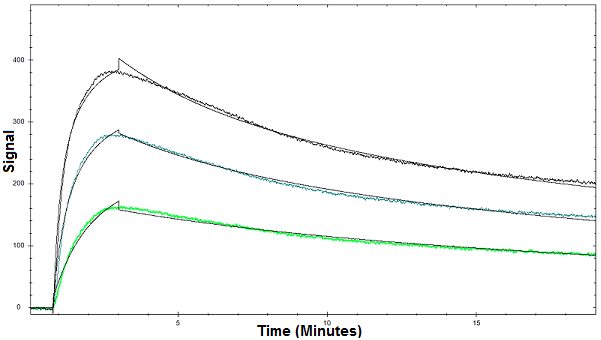
Figure 1. Binding curves of Con A binding to glycan using OpenSPR

[/et_pb_text][et_pb_text admin_label=”Paragraph 2″ background_layout=”light” text_orientation=”left” text_font_size=”16″ text_line_height=”1.9em” use_border_color=”off” border_color=”#ffffff” border_style=”solid” custom_margin=”-20px|||” background_position=”top_left” background_repeat=”repeat” background_size=”initial”]

Why do we study carbohydrate interactions?

[/et_pb_text][et_pb_text admin_label=”Paragraph 2″ background_layout=”light” text_orientation=”left” text_font_size=”16″ text_line_height=”1.9em” use_border_color=”off” border_color=”#ffffff” border_style=”solid” custom_margin=”-20px|||” background_position=”top_left” background_repeat=”repeat” background_size=”initial”]

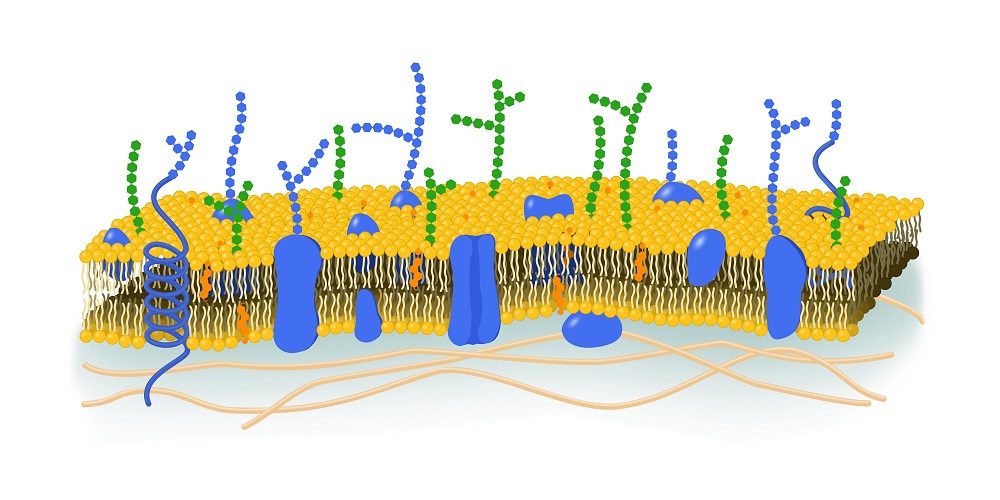
Carbohydrate-protein interactions are important for key processes in biological systems including cell-cell recognition, endocytosis, phagocytosis, signal transduction, and modulating intracellular traffic. Proteins that build to carbohydrates are called lectins and are found in animals, plants and microorganisms. Glycoproteins and glycolipids are proteins and lipids that have oligosaccharide chains (glycans) attached to them, and these are the carbohydrates that lectins bind to. The carbohydrates are attached to proteins during a cotranslational or posttranslational modification called glycosylation. The glycan chains are important for recognition processes in biological systems.
[/et_pb_text][et_pb_text admin_label=”caption (not done yet)” background_layout=”light” text_orientation=”left” text_line_height=”1.9em” use_border_color=”off” border_color=”#ffffff” border_style=”solid” custom_margin=”-20px|||” custom_padding=”||25px|” background_position=”top_left” background_repeat=”repeat” background_size=”initial”]

The cell membrane: Carbohydrates attached to proteins and lipids are important for cell recognition

[/et_pb_text][et_pb_text admin_label=”Paragraph 4″ background_layout=”light” text_orientation=”left” text_font_size=”16″ text_line_height=”1.9em” use_border_color=”off” border_color=”#ffffff” border_style=”solid” custom_margin=”-20px|||” background_position=”top_left” background_repeat=”repeat” background_size=”initial”]

Why do researchers use SPR to characterize carbohydrate-protein interactions?

[/et_pb_text][et_pb_text admin_label=”Paragraph 4″ background_layout=”light” text_orientation=”left” text_font_size=”16″ text_line_height=”1.9em” use_border_color=”off” border_color=”#ffffff” border_style=”solid” custom_margin=”-20px|||” background_position=”top_left” background_repeat=”repeat” background_size=”initial”]

Determining the binding kinetics and affinity of carbohydrate-protein interactions is important for understanding how lectins modulate signal processes in biological systems. Techniques such as quartz crystal microbalance (QCM), enzyme-linked lectin assays (ELLAs), NMR in conjunction with isothermal calorimetry (ITC) and fluorescence spectroscopy have been used to study these interactions. Many of these techniques require complex labelling steps or expensive, complex instrumentation. In recent years, many researchers have turned to benchtop surface plasmon resonance (SPR) to characterize their carbohydrate-lectin interactions as a user-friendly and low maintenance solution. SPR is a label-free technology which allows researchers to quantitatively analyze binding between two biomolecules. SPR technology allows us to determine the kon, koff and KD of interactions, providing deeper insight into binding events compared to other techniques that only give endpoint measurements.

[/et_pb_text][et_pb_text admin_label=”Paragraph 4″ background_layout=”light” text_orientation=”left” text_font_size=”16″ text_line_height=”1.9em” use_border_color=”off” border_color=”#ffffff” border_style=”solid” custom_margin=”-20px|||” background_position=”top_left” background_repeat=”repeat” background_size=”initial”]

Example of a lectin (carbohydrate binding protein) interaction analyze using OpenSPR™

[/et_pb_text][et_pb_text admin_label=”Paragraph 4″ background_layout=”light” text_orientation=”left” text_font_size=”16″ text_line_height=”1.9em” use_border_color=”off” border_color=”#ffffff” border_style=”solid” custom_margin=”-20px|||” background_position=”top_left” background_repeat=”repeat” background_size=”initial”]

Below is an example of how OpenSPR™ was used to characterize the binding kinetics of a lectin-glycan interaction. OpenSPR sensor chips were activated with a glycan coating and the interaction between the glycan and concanavalin A (con A) was measured. The glycan coating immobilized on the sensor chips is composed of oligosaccharide chains that you would find attached to a glycoprotein in a biological system. Con A is a lectin that binds to a number of sugars, glycoproteins, and glycolipids. Three concentrations of Con A were tested and the binding kinetics and affinity were determined using a bivalent binding model. This illustrates the value of surface plasmon resonance analysis in such applications as the strength of the interaction between the glycan and lectin can be easily determined. You can find the full study here.

[/et_pb_text][et_pb_text admin_label=”caption (not done yet)” background_layout=”light” text_orientation=”left” text_line_height=”1.9em” use_border_color=”off” border_color=”#ffffff” border_style=”solid” custom_margin=”-20px|||” custom_padding=”||25px|” background_position=”top_left” background_repeat=”repeat” background_size=”initial”]

Figure 1. Binding curves of Con A binding to glycan using OpenSPR

[/et_pb_text][/et_pb_column][/et_pb_row][et_pb_row admin_label=”row” make_fullwidth=”off” use_custom_width=”off” width_unit=”on” use_custom_gutter=”off” padding_mobile=”off” allow_player_pause=”off” parallax=”off” parallax_method=”off” make_equal=”off” parallax_1=”off” parallax_method_1=”off” column_padding_mobile=”on” background_position=”top_left” background_repeat=”repeat” background_size=”initial”][et_pb_column type=”4_4″][et_pb_cta button_url=”https://hubs.ly/H0fm-V10″ url_new_window=”on” button_text=”Discuss your interactions with an application scientist today” use_background_color=”off” background_layout=”light” header_text_color=”#1e73be” body_font_size=”16″ use_border_color=”off” custom_button=”off” button_icon_placement=”right” background_position=”top_left” background_repeat=”repeat” background_size=”initial” _builder_version=”3.0.96″]

[/et_pb_cta][/et_pb_column][/et_pb_row][et_pb_row disabled_on=”off|off|off” disabled=”off” background_position=”top_left” background_repeat=”repeat” background_size=”initial”][et_pb_column type=”4_4″][et_pb_text background_layout=”light” text_orientation=”left” text_font_size=”12″ text_line_height=”1.9em” use_border_color=”off” border_color=”#ffffff” border_style=”solid” background_position=”top_left” background_repeat=”repeat” background_size=”initial” _builder_version=”3.0.96″]

M.J. Linman et al. “Surface Plasmon Resonance Study of Protein-Carbohydrate Interactions using Biotinylated Sialosides.” Anal Chem, Vol. 80, pp. 4007-4013, 2008.

[/et_pb_text][/et_pb_column][/et_pb_row][/et_pb_section]