Your target isn’t missing, it’s moving.
Some of the most important protein dynamics happen faster than the blink of an eye. If you’re not measuring on the millisecond scale, you’re missing the story.
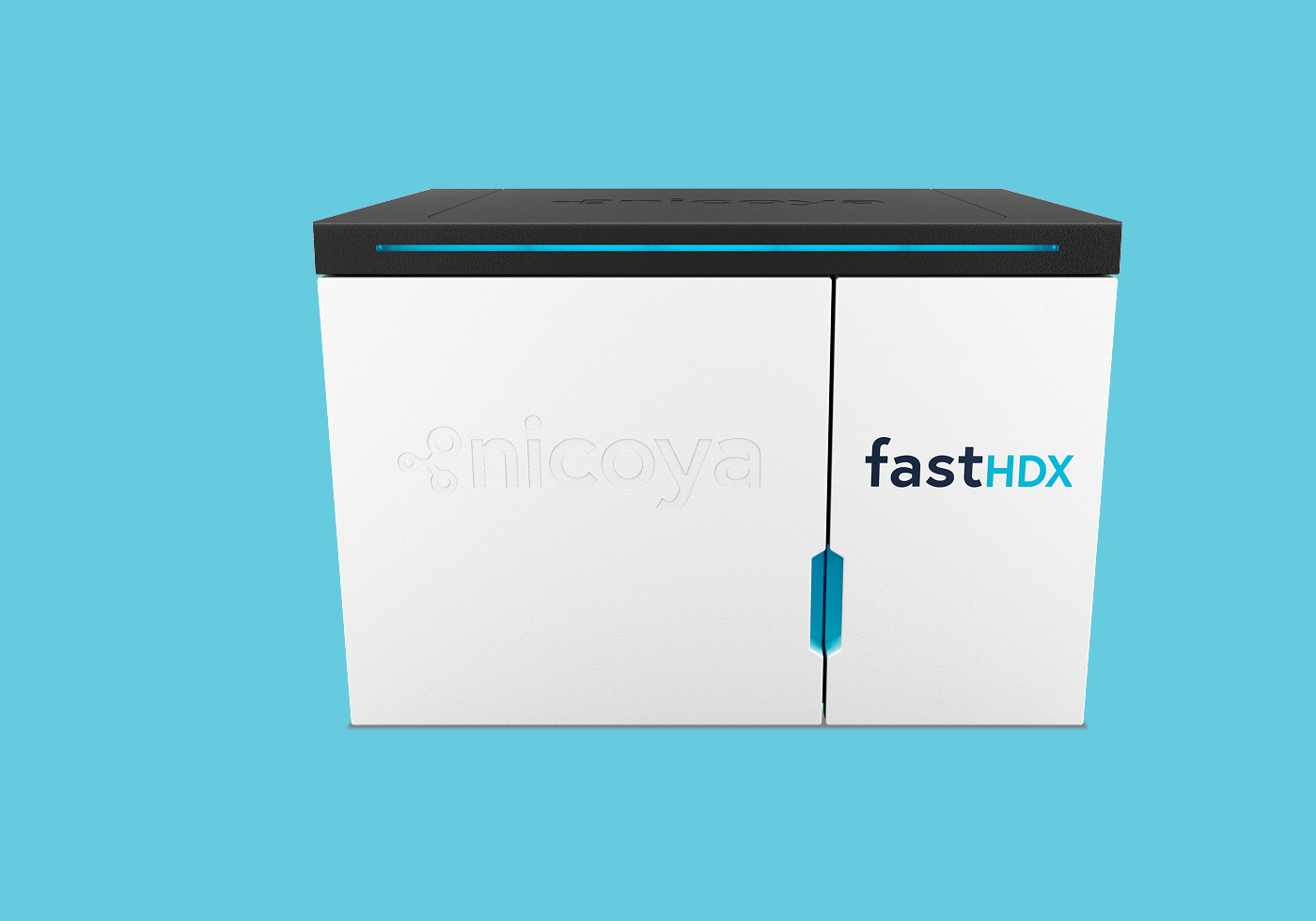
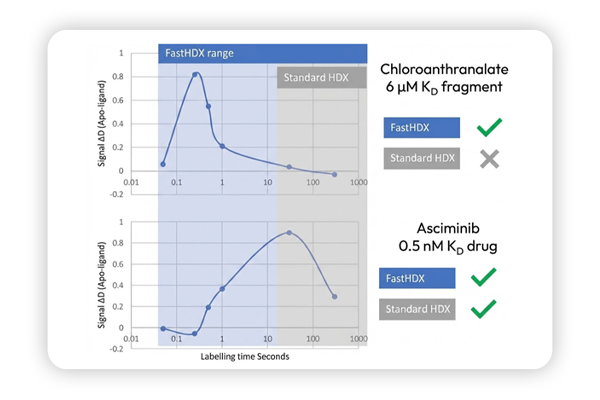
Capture every transient state in protein dynamics.
FastHDX captures both rapid, transient conformational states and long-timescale structural changes — from 50 milliseconds to over 24 hours — within a single platform. Generate comprehensive kinetic and structural profiles without switching platforms or sacrificing temporal resolution.
Don’t just keep up. Stay ahead.
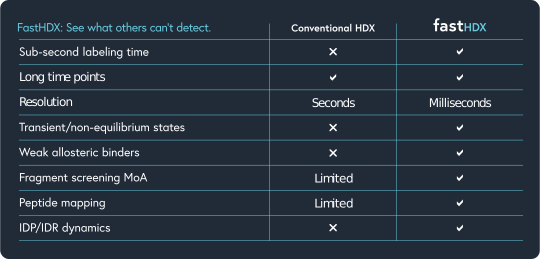
Your HDX workflow gets you mostly there. FastHDX takes your research to the finish line. With true millisecond labeling resolution (1 ms), FastHDX reveals short-lived conformational states and dynamic interactions that conventional seconds-scale HDX approaches cannot detect. Researchers can finally explore weak fragment binding, transient allostery, and fleeting regulatory motions with confidence and clarity.
“FastHDX enabled us to capture millisecond-resolved exchange behaviour and quantify low-stability structural dynamics that are inaccessible with established HDX-MS approaches. By resolving these fast processes, we can begin to connect protein dynamics with functional outcomes in ways that were not previously possible. As millisecond HDX-MS becomes more widely adopted, it will significantly expand how we study protein motion, disorder, and mechanism – ultimately unlocking our understanding of complex disease, biotechnology and medicines”
Jonathan J. Phillips,
University of Exeter
Discover at the speed of life.
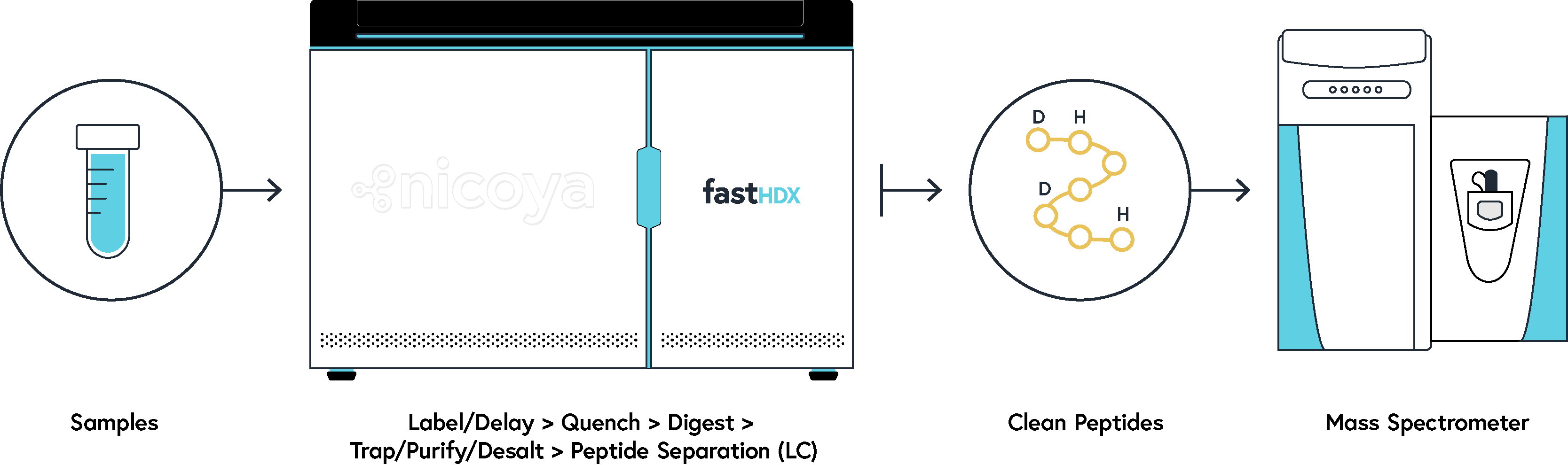
FastHDX is designed for real-world discovery workflows – using just 8 µL of sample and plugs seamlessly into a sample processing workflow for digestion, clean up and separation that is optimized to produce the best HDX data out there. Even when precious samples are limited, teams can generate high-impact structural dynamics data without disrupting established lab routines.
Supported Applications

Allostery
Map and understand transient, non-equilibrium states and transitions resulting from allosteric regulation.

Small molecule binding
Identify weak binders that are missed by traditional systems, or require tedious NMR.

IDPs and IDRs
Map and characterize disordered regions, allowing for IDP/IDR targeting therapies.

Peptides
Assess peptide and peptide conjugate structures to develop targets and understand MoA.
Under the hood.
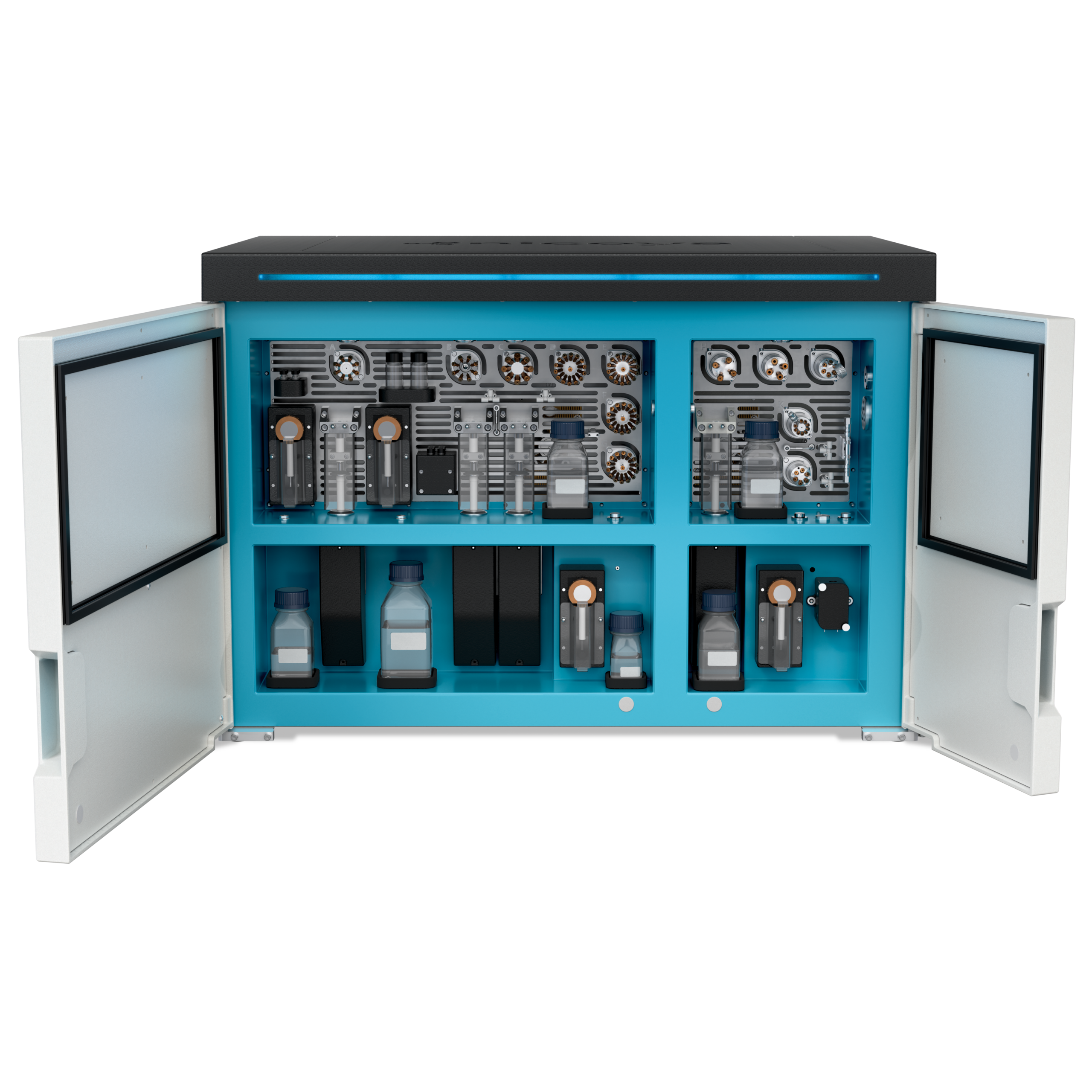
FastHDX uses a fully automated quench-flow system to precisely control hydrogen–deuterium labeling from milliseconds to minutes. Samples are automatically loaded and mixed with D₂O using a patented delay loop design that accurately defines labeling time by controlling flow rate and volume between the labeling and quench mixers. The reaction is rapidly quenched and seamlessly transferred through a bypass valve into standard LC–MS workflows for digestion, separation, and mass analysis. The result is precise, reproducible millisecond HDX measurements delivered in a robust, automated platform that integrates directly with existing laboratory infrastructure.
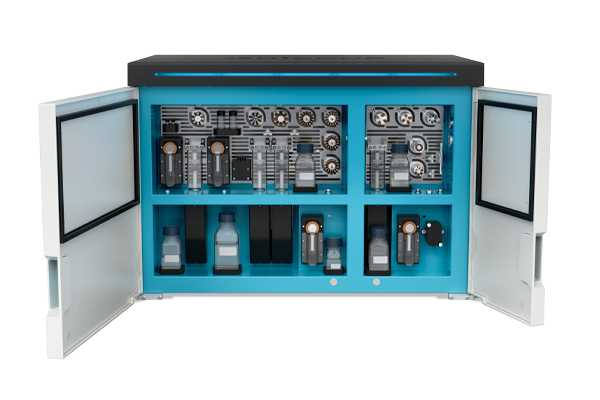
FastHDX Technical Specifications
| Category: | Specification: |
|---|---|
| Labeling time range | 50 ms to 24h |
| Labeling resolution | 1 ms |
| Temperature control | 0°C to 40°C |
| Quench zone temperature | 0°C |
| Sample volume | 8 µL (per time point) |
| Samples per run | Up to 6, automated |
| Unattended run time | Up to 24h (for 6 samples); Up to 7 days, with autosampler |
Full speed ahead.
Book a meeting to learn more about FastHDX.